
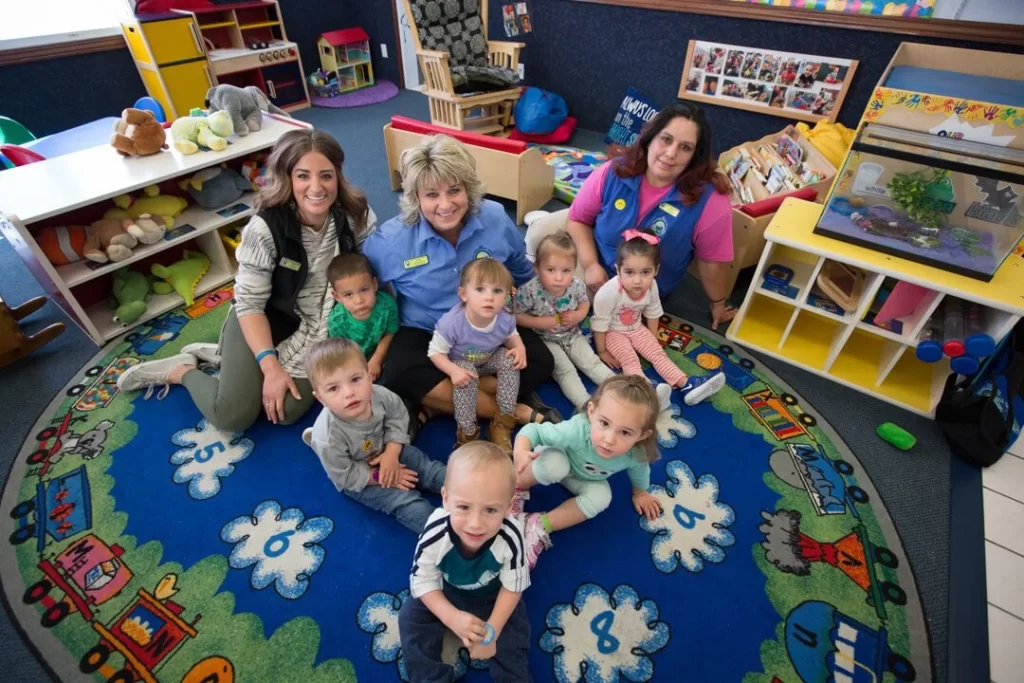
Searching for a preschool near me in West Greeley can feel overwhelming. There are more options than most families expect, and the differences between programs are not always obvious from a website or a quick tour. What separates a truly strong preschool from one that simply looks the part comes down to how the classroom is structured, how learning is delivered, and whether the environment is genuinely designed around how young children develop.
This guide is written to help families ask the right questions, understand what they are looking at during a visit, and make a confident decision for their child this fall.
What to Actually Look for When Comparing Preschools in Greeley
Start With the Classroom Layout, Not the Brochure
When you walk into a preschool classroom, the physical environment tells you more than any marketing material will. A well-designed classroom is organized into distinct interest areas, each one intentionally built to target specific developmental skills while giving children the freedom to explore at their own pace.
This approach is grounded in decades of early childhood research. Children learn most effectively when they can make choices, move between activities, and engage with materials hands-on. A classroom that is primarily set up with rows of desks and teacher-directed seat work is not aligned with how preschool-age children actually develop.
At ABC Child Development Center West, every preschool classroom is organized around interest areas that give children ownership of their learning while keeping developmental goals clearly in focus. You can see how this structure connects to our full program approach on our preschool programs page.
How Interest Areas Compare to Traditional Instruction
Not all preschool formats are equal. Here is a practical comparison of what families typically encounter:
| Feature | Interest Area Model | Traditional Seat-Work Model |
|---|---|---|
| Learning style | Child-directed, hands-on exploration | Teacher-directed, passive instruction |
| Skills targeted | Cognitive, social, emotional, physical | Primarily academic recall |
| Self-regulation development | Built into daily structure | Limited opportunity |
| Kindergarten readiness | Strong across all domains | Strong academically, variable socially |
| Child engagement | High — child chooses activities | Variable — dependent on attention span |
What Each Interest Area Is Actually Teaching Your Child
Parents sometimes worry that play-based interest areas lack academic rigor. In practice, each area targets specific, measurable skills that directly prepare children for kindergarten and beyond.
Literacy and Writing: This area builds early reading skills and fine motor control through activities like tracing, journaling, letter recognition games, and storytelling prompts. Children develop the hand strength and pencil grip they will need for formal writing, alongside phonemic awareness that supports early reading.
Math and Science: Hands-on counting, sorting, measuring, and discovery-based experiments teach children to observe, classify, and reason. A child sorting buttons by size is practicing the same categorization logic formal math instruction will build on. A child watching what happens when baking soda meets vinegar is learning to form and test a hypothesis.
Art and Sensory: Creative expression through painting, collage, clay, and sensory bins develops pattern recognition, spatial reasoning, and problem-solving. Process art, where the focus is on the act of creating rather than the finished product, is one of the richest early math environments in a preschool classroom.
Dramatic Play and Blocks: Cooperative play in a pretend kitchen or store teaches negotiation, turn-taking, and early number sense. Block building develops spatial awareness, symmetry, and structural reasoning, skills that directly support geometry and engineering thinking in later years.
Questions to Ask on Every Preschool Tour
A strong preschool should be able to answer these questions clearly and confidently. If a program struggles to explain its approach, that tells you something important.
- How are your teachers credentialed, and what ongoing professional development do they receive?
- What is your child-to-teacher ratio, and how does that change throughout the day?
- How do teachers support learning during free choice or interest area time?
- How do you communicate with families about a child's development and progress?
- What does your approach to behavior guidance look like?
- How is your curriculum aligned with kindergarten readiness standards?
These are not trick questions. Every quality program should welcome them. To understand the standards we hold ourselves to, our quality commitment page outlines exactly what families can expect from us at every level of our program.
The Value Comparison: What You Are Actually Paying For
When families compare preschool options, cost is always part of the conversation. But the more useful question is what a program delivers for the investment. Two programs at similar price points can offer dramatically different outcomes depending on staff qualifications, classroom design, curriculum depth, and family communication practices.
A program staffed by credentialed early childhood educators, organized around research-backed classroom design, and supported by ongoing quality improvement processes is not the same as a program that simply provides supervision. The gap in outcomes, particularly in social-emotional development and kindergarten readiness, is well documented in early childhood research.
For families enrolling for the first time, our new family discount at ABC CDC West is a practical way to experience our program before committing fully.
Frequently Asked Questions
What is the best preschool in Greeley for kindergarten readiness?
The best preschool for kindergarten readiness is one that develops the whole child, not just academic recall. Look for programs with credentialed staff, low ratios, a structured but flexible curriculum, and a strong emphasis on social-emotional development. Children who can self-regulate, follow directions, communicate needs, and work alongside peers consistently outperform peers in kindergarten assessments, regardless of how many letters or numbers they have memorized.
How do I know if a preschool near me is actually high quality?
Ask about staff credentials and turnover rates, tour the classroom during active learning time rather than during nap or transition, and ask how the program measures and communicates child progress. A high-quality program will have clear, confident answers to all of these questions and will welcome your scrutiny.
What age should a child start preschool in Greeley?
Most children are developmentally ready for a structured preschool environment between ages three and four. Readiness depends more on social-emotional milestones than on age alone. Children who can separate from a caregiver, communicate basic needs, follow simple directions, and engage with peers for short periods are generally ready to benefit from a preschool program.
What is the difference between preschool and pre-K in Colorado?
In Colorado, preschool typically serves children ages three to four in a play-based or mixed learning environment. Pre-K programs are generally designed for four-year-olds in the year before kindergarten and may follow a more structured curriculum aligned with kindergarten entry standards. Both can be high quality. The key is whether the program's approach matches your child's developmental stage and your family's goals.
Claim Your Free Week